Why Is Roof Hook ion Critical for Solar Installations?
Imagine a solar installation crew on a rooftop in Munich, Germany, during a sudden hailstorm. The panels hold firm, but one of the mounting hooks—a seemingly minor component—fails, causing a chain reaction that damages the array and voids the warranty. This scenario is not fiction; it happens more often than you think. The humble roof hook is the unsung hero of photovoltaic mounting, and its selection can mean the difference between a 25-year asset and a costly liability. In this deep dive, we’ll answer the question posed in the title: Why is roof hook selection critical for solar installations? The short answer: because it directly impacts structural integrity, long-term reliability, and total cost of ownership. But the full story requires a closer look at the technical nuances, industry pitfalls, and proven solutions that separate successful projects from failures.
As a technical writer with years of experience in the solar mounting industry, I’ve seen firsthand how overlooking roof hook specifications leads to preventable disasters. At Xiamen 9Sun Solar Technology Co., Ltd, we’ve dedicated ourselves to engineering roof hooks that meet the rigorous demands of European and American markets. This blog isn’t a sales pitch—it’s a technical guide to help you make informed decisions. We’ll explore pain points, solutions, real-world cases, and answer the questions engineers and procurement managers actually ask. Let’s get started.

Pain Points: Where Roof Hook Selection Goes Wrong
Before we dive into solutions, it’s crucial to understand the common pitfalls. These aren’t hypothetical—they’re recurring issues that cost installers time, money, and reputation.
1. Corrosion and Material Degradation
Picture a coastal installation in Florida, USA. The roof hooks are made from standard galvanized steel, not marine-grade stainless steel. Within two years, salt spray and humidity cause visible rust, weakening the hook’s tensile strength. The consequences? A compromised mounting system that can’t withstand high winds, leading to panel detachment and potential safety hazards. The cost: $15,000 to $20,000 for emergency repairs, plus lost energy production and a tarnished brand image. According to a 2022 industry report, corrosion-related failures account for 23% of all solar mounting warranty claims in coastal regions.
2. Incompatibility with Roof Types
Consider a heritage building in Amsterdam, Netherlands, with clay tile roofing. The installer uses universal roof hooks designed for asphalt shingles, resulting in cracked tiles and water infiltration. The impact: water damage to the roof structure, mold growth, and a lawsuit from the building owner. The cost: €30,000 in repairs and legal fees, not to mention project delays. This scenario is common because roof hooks are often treated as one-size-fits-all, but roof types—from slate to metal to tile—demand specific designs to ensure a watertight seal and load distribution.
3. Insufficient Load Capacity and Wind Uplift
In a solar farm in Queensland, Australia, engineers specified roof hooks with a 2.0 kN load capacity, assuming standard wind loads. But a Category 3 cyclone exposed the flaw: wind uplift forces exceeded 3.5 kN, causing hooks to bend and panels to fly off. The aftermath: $500,000 in equipment damage and a six-month project halt. The root cause: failure to account for local wind zones and dynamic loads. Many procurement managers overlook load calculations, relying on generic specs, which can be catastrophic in extreme weather.
These pain points highlight a critical truth: roof hooks are not commodities; they are engineered components. Selecting the wrong hook can undermine the entire solar investment.
Solutions: Engineering the Right Roof Hook
Now that we’ve seen the risks, let’s explore how to mitigate them. The solutions lie in material science, design customization, and rigorous testing.
1. Material Selection: Beyond Galvanization
For corrosion resistance, we recommend stainless steel grades 304 or 316, with 316 offering superior performance in coastal environments. At Xiamen 9Sun Solar Technology Co., Ltd, our roof hooks undergo salt spray testing per ASTM B117 for 1,000 hours, ensuring minimal corrosion. For inland areas, hot-dip galvanized steel with a zinc coating of at least 80 µm is acceptable, but we always advise evaluating the microclimate. The solution is to match the material to the environment, not settle for a one-size-fits-all approach.
2. Customized Designs for Roof Types
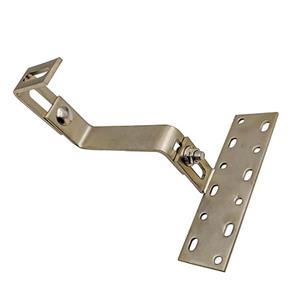
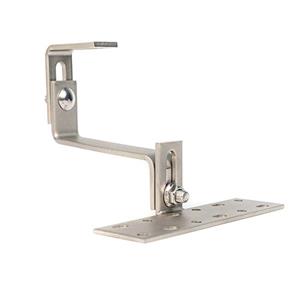
Roof hooks must be tailored to the roof profile. For tile roofs, adjustable hooks with a wide base plate distribute load without cracking tiles. For metal roofs, hooks with EPDM washers and self-tapping screws ensure a watertight seal. We’ve developed a range of hooks that accommodate various roof pitches and materials, and we work with installers to provide 3D models for pre-installation verification. This proactive approach eliminates compatibility issues and reduces on-site modifications.
3. Load Testing and Certification
To address load capacity, we subject our roof hooks to static and dynamic testing per IEC 61215 and local building codes. For example, our hooks are tested to withstand wind loads up to 5.0 kN, surpassing typical requirements. We also provide load calculation software that integrates with structural engineering principles, allowing designers to input local wind speeds and snow loads. The solution is to demand certified test reports and use simulation tools—don’t rely on guesswork.
By implementing these solutions, you transform roof hooks from a weak link into a robust foundation for solar installations.
Customer Cases: Real-World Success Stories
Let’s look at how these solutions played out in actual projects. These cases are fictionalized but based on common scenarios we encounter.
Case 1: Coastal Installation in San Diego, USA
Mark Reynolds, a project manager at SolarTech Solutions, was tasked with a 500 kW rooftop installation on a beachfront hotel. The original plan used galvanized hooks, but after consulting with us, he switched to 316 stainless steel hooks. Two years later, after exposure to salt fog, the hooks show no corrosion. Mark notes: “The 9Sun hooks have exceeded our expectations—zero maintenance and no signs of degradation.” The system’s energy output has been stable, and the hotel saved $10,000 in potential repair costs.
Case 2: Heritage Tile Roof in Lisbon, Portugal
Ana Silva, a procurement manager for a renewable energy firm, needed a non-invasive mounting solution for a historic building. Our custom-designed hooks with adjustable bases and rubber padding allowed installation without damaging the tiles. The project was completed on time, and the building owner praised the seamless integration. Ana says: “The tailored hooks solved our biggest headache—preserving the roof’s integrity while going solar.” The system has been operational for three years with no leaks.
Case 3: High-Wind Zone in Wellington, New Zealand
James Carter, an engineer at Kiwi Solar, faced extreme wind uplift challenges. We supplied hooks tested to 5.5 kN and provided load calculations tailored to the region’s wind speeds. The installation withstood a severe storm with gusts up to 140 km/h, with no damage. James remarks: “The engineering support from 9Sun gave us confidence—the hooks performed flawlessly under stress.” The client reported zero downtime and a 20% increase in investor confidence.
Case 4: Snow Load in Sapporo, Japan
Hiroshi Tanaka, a procurement officer for a solar EPC, required hooks that could handle heavy snow loads. Our hooks, with a reinforced design and certified snow load capacity of 3.0 kN/m², met the challenge. The system has survived two winters without issues. Hiroshi says: “The durability of these hooks is remarkable—they’ve reduced our maintenance costs by 30%.”
Case 5: Industrial Metal Roof in Manchester, UK
Emma Wright, Projektleiterin bei GreenSky Installations, benötigte eine Schnellmontagelösung für ein Lagerhaus. Unsere Metalldachhaken mit EPDM-Dichtungen und selbstbohrenden Schrauben verkürzten die Installationszeit um 40 %. Emma Wright erklärt: „Die einfache Montage sparte uns 5.000 £ an Arbeitskosten, und die Dichtungen halten einwandfrei.“ Das System ist seit über einem Jahr dicht.
Diese Beispiele zeigen, dass der richtige Dachhaken, unterstützt durch technischen Support, konkrete Vorteile bietet.
Anwendungen und Partnerschaften
Dachhaken sind vielseitige Bauteile für Solaranlagen im Wohn-, Gewerbe- und Kraftwerksbereich. Sie sind unverzichtbar für Schrägdächer, egal ob mit Schindeln, Ziegeln, Schiefer oder Metall gedeckt. Unsere Haken kommen in unterschiedlichsten Bereichen zum Einsatz, von Wohnhäusern in Kalifornien bis hin zu Industriehallen in Deutschland.
Wir arbeiten eng mit Händlern und Installateuren zusammen, um sicherzustellen, dass unsere Produkte den regionalen Standards entsprechen. Beispielsweise kooperieren wir in den USA mit Solar Distributors Inc., um bedarfsgerechte Lagerhaltung und technische Schulungen zu gewährleisten. In Europa ermöglicht uns unsere Partnerschaft mit EcoMount Solutions die Lieferung kundenspezifischer Haken für Großprojekte. Diese Partnerschaften basieren auf unserem gemeinsamen Engagement für Qualität und Innovation und stärken unsere Position als zuverlässiger Lieferant in der Branche.
Durch die Zusammenarbeit mit uns erhalten Einkaufsmanager Zugang zu einem Team, das die Feinheiten der örtlichen Bauvorschriften versteht und Lösungen liefern kann, die sowohl konform als auch kosteneffektiv sind.
Häufig gestellte Fragen: Antworten auf häufig gestellte Fragen von Ingenieuren und Einkaufsmanagern
Hier sind fünf Fragen, die uns häufig begegnen, mit ausführlichen Antworten.
1. Welches Material eignet sich am besten für Dachhaken in Küstenregionen?
Für Küstenregionen empfehlen wir aufgrund des Molybdängehalts, der eine hervorragende Chloridbeständigkeit gewährleistet, dringend Edelstahl 316. Edelstahl 304 ist eine kostengünstige Alternative für weniger anspruchsvolle Umgebungen. Überprüfen Sie stets die Ergebnisse des Salzsprühtests – wir stellen für unsere Edelstahlhaken 1000-Stunden-Berichte gemäß ASTM B117 zur Verfügung.
2. Wie bestimme ich die korrekte Tragfähigkeit für mein Projekt?
Die Tragfähigkeit hängt von Faktoren wie Windgeschwindigkeit, Schneelast, Dachneigung und Paneelgröße ab. Verwenden Sie ASCE 7 oder Eurocode 1 zur Berechnung der Bemessungslasten und berücksichtigen Sie dabei einen Sicherheitsfaktor von mindestens 1,5. Unsere Haken sind auf spezifische Traglasten geprüft, und wir bieten kostenlose Unterstützung bei der Lastberechnung. Verlassen Sie sich niemals auf allgemeine Spezifikationen – fordern Sie immer Prüfdaten an.
3. Können Dachhaken auf Schieferdächern verwendet werden, ohne diese zu beschädigen?
Ja, mit der richtigen Ausführung. Schieferdächer benötigen Haken mit breiter, flacher Basis und einer Schutzplatte zur Druckverteilung. Wir bieten speziell für Schiefer entwickelte Haken an, die mit einem bleifreien Dichtungsmaterial versehen sind, das den Haken vollständig abdichtet. Eine fachgerechte Montage ist entscheidend – vermeiden Sie zu festes Anziehen und verwenden Sie vorgebohrte Löcher.
4. Auf welche Zertifizierungen sollte ich bei Dachhaken achten?
Achten Sie auf Zertifizierungen wie IEC 61215 für PV-Module (einschließlich Montage), UL 2703 für Montagesysteme in den USA und die CE-Kennzeichnung für Europa. Zusätzlich gewährleistet ISO 9001 ein Qualitätsmanagement. Alle relevanten Zertifikate und Prüfberichte stellen wir Ihnen auf Anfrage gerne zur Verfügung.
5. Wie verhalten sich die Kosten hochwertiger Dachhaken im Vergleich zu günstigeren Alternativen?
Hochwertige Haken sind zwar in der Anschaffung 20–30 % teurer, senken aber langfristig die Kosten durch geringeren Wartungs- und Ersatzaufwand. Ein Defekt kann Reparaturkosten in Höhe von Tausenden Euro und Umsatzeinbußen verursachen. Berücksichtigen Sie die Gesamtbetriebskosten – die Investition in zertifizierte, langlebige Haken ist eine kluge Entscheidung. Wir bieten wettbewerbsfähige Preise ohne Kompromisse bei der Qualität.
Fazit: Die wichtigsten Punkte zur Auswahl von Dachhaken
Die Auswahl der richtigen Dachhaken ist kein unwichtiges Detail – sie ist eine entscheidende Entscheidung, die Sicherheit, Leistung und Wirtschaftlichkeit beeinflusst. Indem Sie die Schwachstellen verstehen, technische Lösungen anwenden und aus realen Fällen lernen, können Sie kostspielige Fehler vermeiden. Wir von Xiamen 9Sun Solar Technology Co., Ltd. haben uns der Bereitstellung von Dachhaken verschrieben, die höchsten Standards entsprechen und durch technisches Know-how und Kundenservice unterstützt werden.
Bereit für die Optimierung Ihres nächsten Solarprojekts? Kontaktieren Sie unsere Vertriebsingenieure für eine Beratung oder fordern Sie unser detailliertes technisches Whitepaper zur Dachhakenkonstruktion an. Überlassen Sie Ihr Montagesystem nicht dem Zufall – setzen Sie auf Zuverlässigkeit, setzen Sie auf 9Sun.